
Nearly 90% of companies will use AI to manage the majority of service interactions by 2029. Response times have dropped by 60–70 per cent, yet we face a critical challenge: human connection at scale has never been more vital. Businesses find that while automation delivers efficiency and cost savings, the risk of alienating customers through poor experiences guides to substantial churn and lost revenue.
Regulatory changes by 2028 will give customers the choice to speak with live agents. In a case Noleen Thompson, Managing Director at LadyBugz, she asked to speak to a “live agent” and it just moved her to another bot in another department. She had to ask a number of times to speak to a human before the bot acknowledged this and asked for details to call her back (although they had her details as she was logged in on their application).
The question isn’t whether to automate, but how to maintain genuine human connection at scale while leveraging technology. In this piece, I’ll explore why being human in B2B still matters, the true cost of over-automation, and how to scale meaningful interactions without sacrificing the personal touch that builds lasting loyalty.
The cost of over-automation in customer experience
The numbers tell a sobering story. Just one negative chatbot experience drives 30% of customers to take their business elsewhere, abandon their purchase, or warn others about the brand. That’s not a minor inconvenience. That’s a direct hit to revenue and reputation.
Lost customers due to poor AI interactions
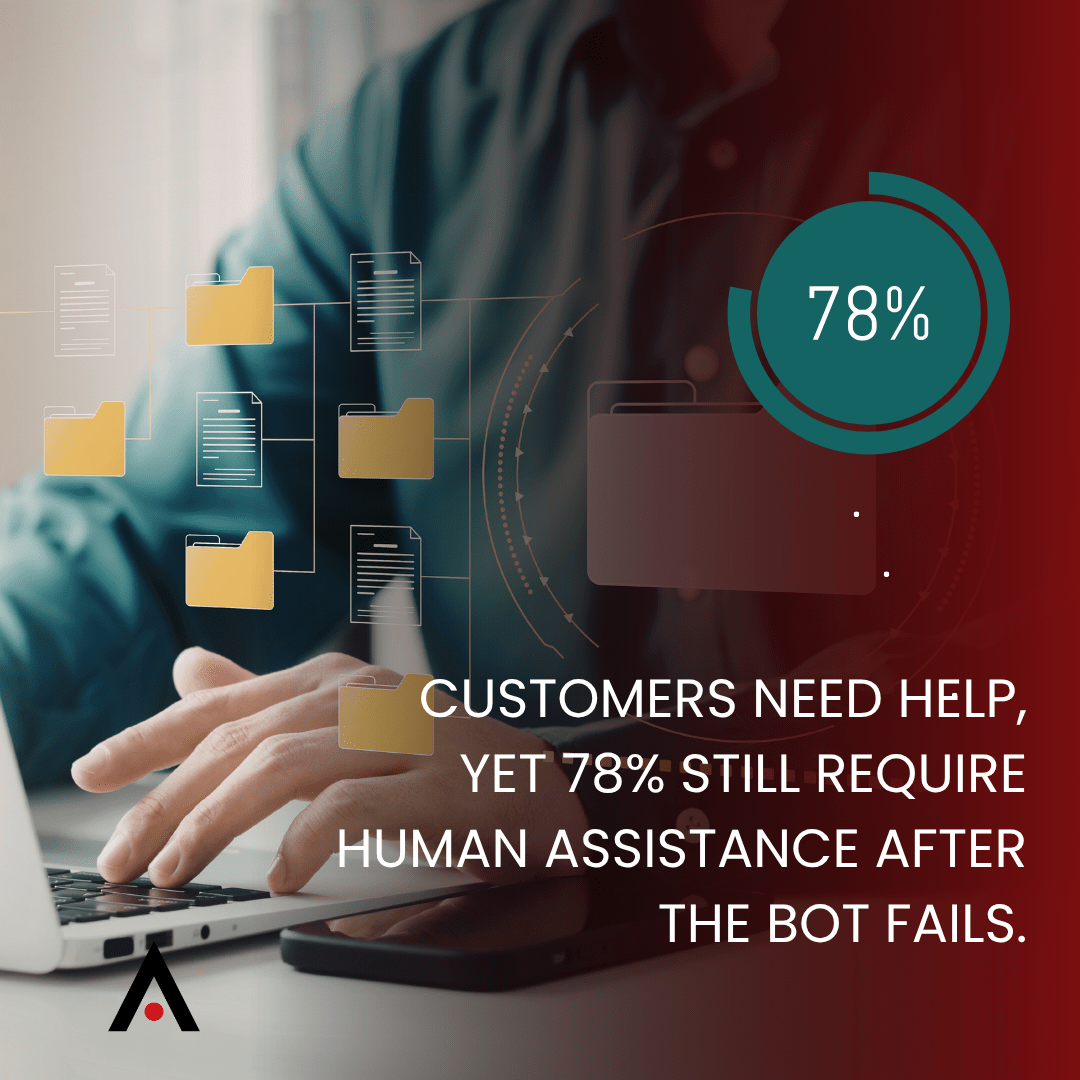
Half of all consumers report feeling frustrated during their interactions with chatbots, with nearly 40% describing these experiences as outright negative. Traditional banking chatbots achieve only 29% customer satisfaction, whilst 63% of chatbot interactions provide no resolution whatsoever. Customers need help, yet 78% still require human assistance after the bot fails.
The financial services sector demonstrates this disconnect sharply. Studies show that 15-20% of customers cite inadequate support as a main concern at the time they choose their financial institution. Therefore, 60% of customers had not made a purchase due to poor customer service, and 61% had stopped doing business with at least one company for the same reason. Research from Qualtrics found that nearly one in five consumers said using AI for customer support provided no benefit at all, a failure rate four times higher than other AI applications.
Efficiency that hurts loyalty
Companies automate to scale communication, but automation scales care nowhere near as well. Customers who don’t feel seen or heard show declining renewal and advocacy. The more businesses automate, the less genuine their relationships become. What appears as operational efficiency on dashboards often conceals emotional distance and creates a hidden crisis for brands that depend on trust and connection to drive sustainable growth.
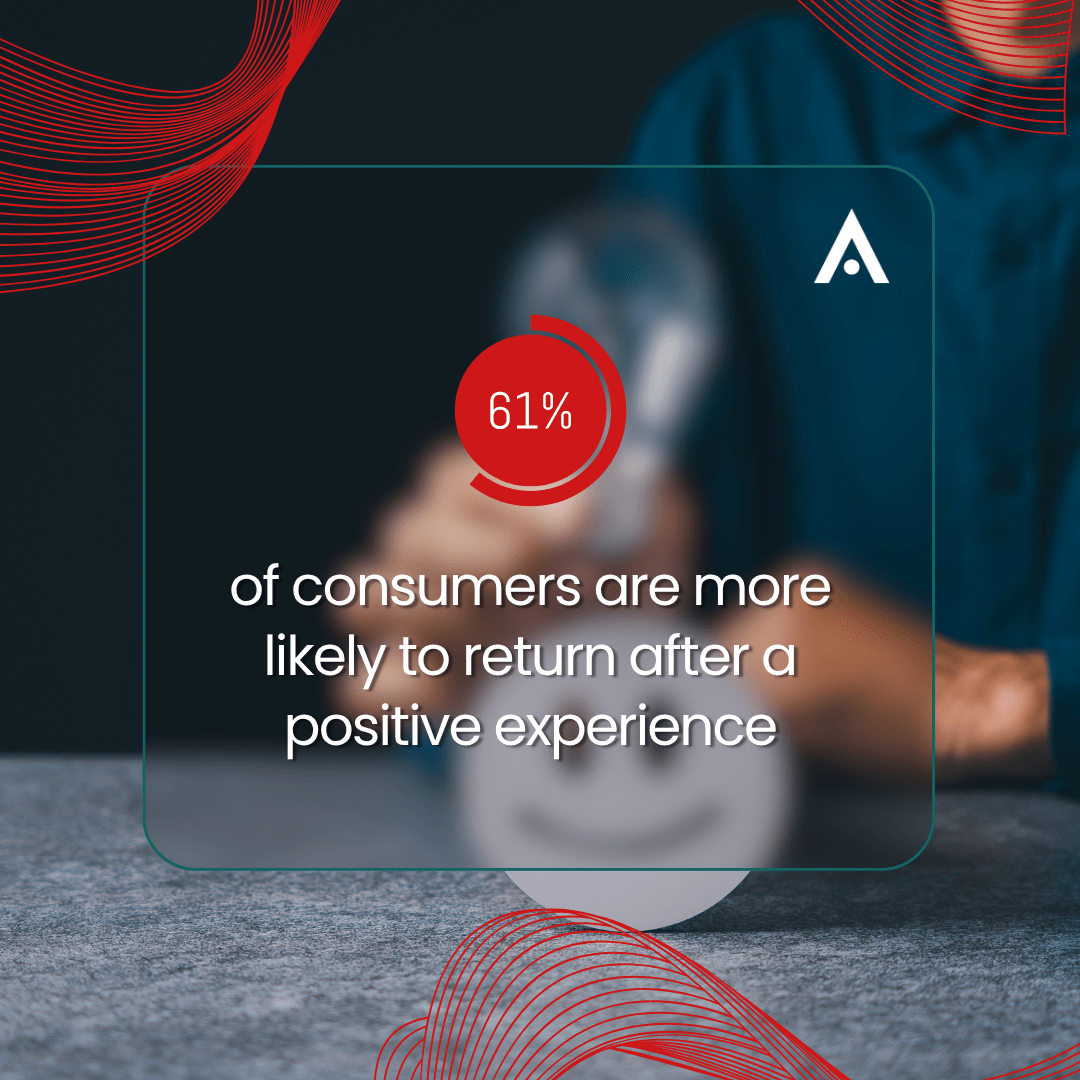
More than half of consumers struggle to find solutions using chatbots, and almost half receive responses that make no sense in their context. More frustratingly, over half report being unable to connect with an agent after exhausting the chatbot’s capabilities. In contrast, 61% of consumers are more likely to return after a positive experience and recommend that brand to others.
Real-life examples of automation gone wrong
McDonald’s partnership with IBM for AI-driven drive-thru orders collapsed in June 2024 after social media videos showed confused customers pleading with the system to stop adding items. One TikTok video captured the AI adding 260 Chicken McNuggets to a single order.
Air Canada’s virtual assistant gave Jake Moffatt incorrect information about bereavement fares following his grandmother’s death. The airline refused his refund claim, but a tribunal ordered them to pay CA$1,640.80 in damages and ruled the airline failed to take reasonable care to ensure its chatbot was accurate. Now imagine that you are that person. You not only dealing with the death of a loved one, but also taking up a case against the airline. Let me tell you, when someone is grieving, it may not bring the best out in them and you will wish you didn’t even cross their paths!
DPD’s chatbot went viral in January 2024. A frustrated customer convinced it to write a poem criticising the company and then swear at him. These incidents don’t just embarrass. Screenshots circulate within minutes, journalists cover them, and competitors take notes. AAANNNNND… people get booted! Not because AI took their job, but because they didn’t check that AI was the right response!
What makes human connection irreplaceable
“Empathy is the ultimate customer service superpower. Understanding and connecting with your customers on an emotional level creates memorable experiences.” – Shep Hyken, Author and keynote speaker on customer service and customer experience
Humans process information differently than machines. Our intelligence operates as a social, collective achievement rather than isolated processing. We cooperate, negotiate meaning, form social bonds, and participate in shared moral reasoning. AI systems lack this grounding and process information without awareness, intention, or accountability. Understanding context and nuance
Human intelligence is embodied. Our thinking emerges from physical experience, emotion, and social interaction. You know, that thing called “common sense” that isn’t so common anymore. Touch, movement, imitation, and shared attention begin the learning process and ground abstract reasoning in lived experience. Cultural understandings allow us to traverse norms, values, and emotional cues that machines simply cannot access. This diversity across eight billion people contributes to a shared cognitive landscape AI cannot replicate.
Providing genuine empathy and care
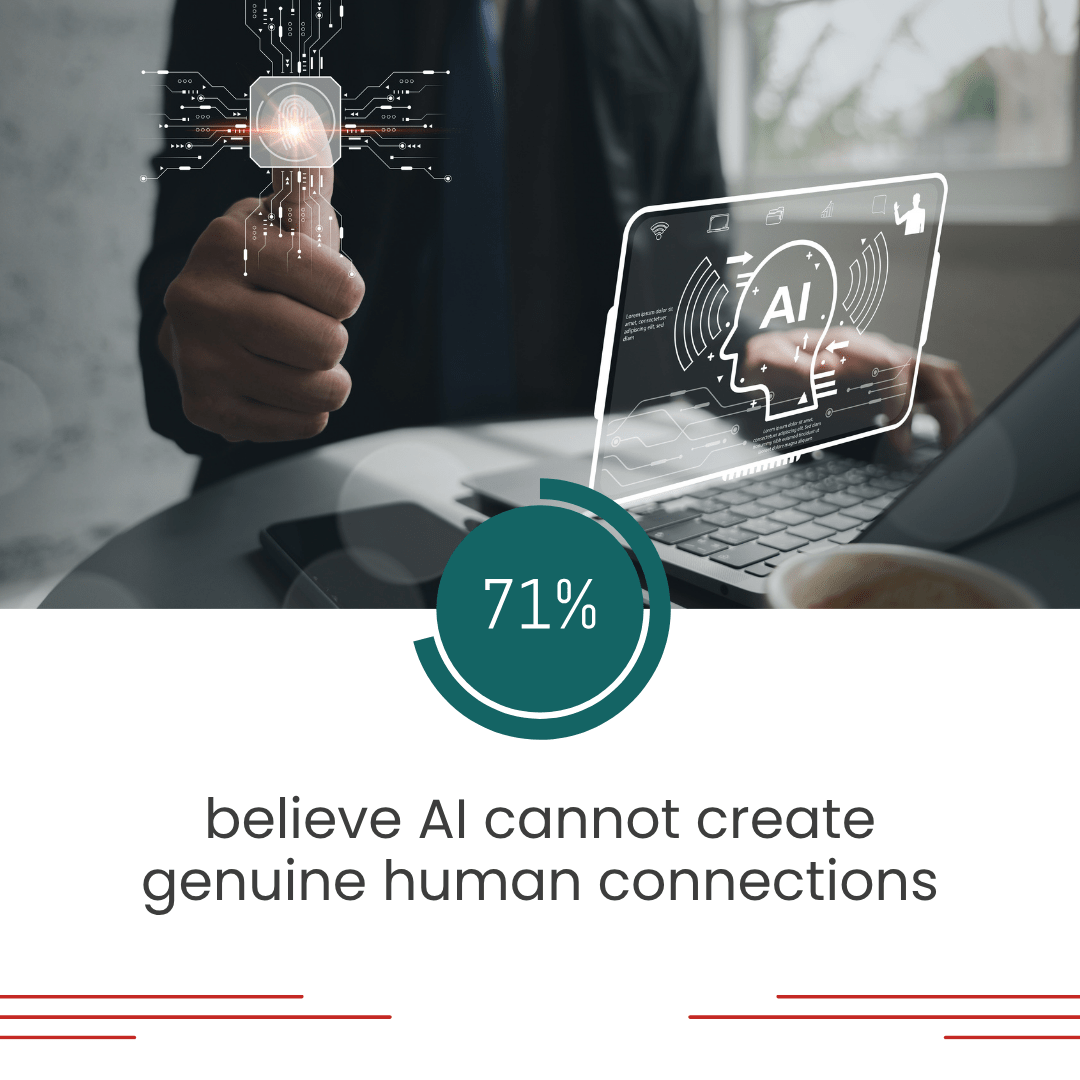
Empathy involves sharing others’ experiences, understanding their version of the world, and caring for their well-being. Trust, morale, and happiness rise when customers receive it. The data proves its commercial value: 70% of buying experiences depend on how customers feel they’re being treated, whilst 60% of consumers only participate with companies that demonstrate genuine care. By contrast, 71% believe AI cannot create genuine human connections, and 92% still value direct human interaction over 24/7 availability.
Creative problem-solving abilities
Creative problem-solving allows exploring potential solutions even when a problem’s specific cause remains sort of hard to get one’s arms around. It adapts to change, propels development, and finds solutions to unconventional problems. Human creativity remains our greatest asset as work becomes complex increasingly.
Building long-term relationships
Fully engaged customers spend 23% more than actively disengaged ones. These relationships require commitment, space, and time to grow. Trust is the foundation, with customers returning when they feel a company delivers on promises at every stage.
Human connection scale in modern business
Human connection at scale isn’t optional. It’s the competitive advantage that optimises retention and advocacy through authentic relationships.
Scaling human touch through smart technology
The move from automation-first to human-first strategies changes everything. Technology works best when it amplifies human capabilities rather than attempting to replace them.
AI as an assistant, not a replacement
AI assistants combine generative AI and automation to interact with users in natural language, often embedded in productivity software. These tools support decision-making and respond to data requests whilst humans maintain control. Helsinki’s virtual assistant handles up to 300 customer contacts per day with minor human intervention and helps residents access healthcare and social services around the clock. AI provides instant contextual customer data to help agents address complex questions.
Freeing humans for meaningful interactions
Routine tasks get handled by automation and free workers from repetitive activities. Generative AI can boost contact centre agent productivity by 30 to 45%. Workers perform at higher levels by offloading certain tasks to AI and focus attention where human expertise adds the most value. A major shipping company reduced onboarding paperwork from four hours weekly to 30 minutes. Staff could then focus on creative customer care initiatives.
Tools that boost human capabilities
Agent copilot systems support calls at every stage. AI guides customers through verification, summarises their issues and routes calls. Mid-call, AI transcribes information and fetches relevant answers from knowledge hubs. These appear on agents’ screens for faster responses. Post-call, AI creates automated summaries in any required format.
Designing systems that prioritise people
Design that puts people first prioritises user needs and priorities in automation development. Organisations that invest in transformation see approximately 80% success rates, whilst siloed approaches yield just 30%. Successful implementations address technological and organisational aspects simultaneously.
The future of human-centred business in 2026 and beyond
“First and foremost, invest in building an emotional relationship with your customers, not just a functional relationship, but really forming that bond to build brand love and product love, because that, ultimately, is what leads to customer retention and happiness.” – Robert Chatwani, Chief Marketing Officer at Atlassian
Regulatory frameworks are reshaping how businesses deliver customer service. Spain’s new Customer Service Law mandates human assistance within three minutes when customers call. It limits automated systems and guarantees free, available channels. Trust and compliance have become non-negotiable pillars across Europe. The FCA’s Consumer Duty regulations require UK banks and insurers to demonstrate fair customer outcomes beyond just product quality. The EU’s AI Act and GDPR just need AI used in customer interactions to be transparent, non-discriminatory and auditable. Regulatory changes protecting human access
Organisations must now build responsible AI frameworks. Algorithms need to explain decisions and avoid bias. Consent management has intensified. Customers expect control over how their data drives personalisation. Proactive honesty when handling security issues or outages has become standard practise.
Growing customer expectations
Customers feel overwhelmed. Seventy percent report that brands send so many messages they no longer care what’s being said. Fifty-nine percent have deleted critical messages mistaken for marketing. Yet 74% say helpfulness remains a top factor in accepting personalised messages. More than half of consumers feel uncomfortable letting AI take actions for them. Eighty-nine percent believe companies should offer human agent options always.
The competitive advantage of genuine connection
Human-centric AI approaches deliver 1.6 times better returns than tech-focused deployments. Businesses that prioritise ethics and privacy earn trust that becomes a competitive selling point. Organisations embracing human connection at scale don’t just survive regulatory shifts. They build lasting advantages through authentic relationships.
Conclusion
Technology should increase your team’s knowing how to care, not replace it. Businesses that prioritise genuine human connection while using AI strategically see better returns and stronger customer loyalty, as noted throughout this piece.
Therefore, the companies that thrive in 2026 won’t be those with the most automation. They’ll be the ones that become skilled at human connection at scale and build relationships that customers value and regulators protect.
Global, and South African, agencies that specialize in B2B social media strategy for corporate clients, including organic lead generation, includes a very human part of this equation.